The latest Hanover Historical Review is now available online!
It includes essays by --
- Matthew Spicer, on the Second Punic War
- Sebastian Vogel, on the collapse of the Roman Empire
- Nico Yoshiki Gotoh, on the Indus River Valley Civilization
- Luke Scherer, on the Soviet LGBTQ+ community
- Claire Walsh, on Hanover alumna David Boyle Duncan
- Alexandria Wells, on Hanover alumna Andrew Harvey Young
- Claire Wojtowicz, on Hanover alumna George Ernest
- Molly Billiard, on nineteenth-century Kentucky quiltmaking
Read the full contents here or pick up a print copy in Classic Hall !!
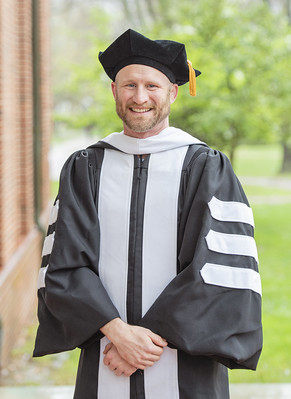
Prof. Miller wins the Baynham Award
The History Department congratulates Prof. Anthony Miller on winning the Arthur and Ilene Baynham Outstanding Teaching Award for 2024!
One of the College's most prestigious awards, the Baynham recognizes teaching excellence, as determined by the votes of current students and recent alumni. To be eligible, a faculty member must be in at least their fourth year of teaching at the College. Thus students and alumni honored Prof. Miller with this recognition at their earliest opportunity to do so.
Keep in touch!
The history department takes pride in our students' success. We're always glad for you to stop by our offices or email us. We also share news from the department and interesting historical finds through Facebook and Instagram.
Ongoing Projects
Founded in 1992, the Hanover Historical Review is a student-edited journal of student scholarship. The HHR Editorial Board welcomes submissions of essays, document transcriptions, and book reviews of a historical nature from any discipline.
A student-faculty-staff team is telling the stories of the first African-American graduates from Hanover College through Learning in Black and White. We'd love for you to join us -- with research assistance or memories or documents. Please contact historians@hanover.edu if you can help.
The Hanover Historical Texts Collection is the history department's pioneering project to put primary source documents online. In 1995, we were among the first to digitize historical documents for use in classrooms around the world. We continue to add to the collection, and we are delighted that researchers, students, and other interested readers use it every day.